7 Powerful Okinawan Diet Longevity Foods That Support Healthy Aging
Why Okinawans Live Past 100: The Nutrition Secret in Their Culture
Okinawa is often mentioned whenever people talk about longevity.
This Japanese island region became famous because of its high number of people living into their 90s and beyond. In many wellness articles, Okinawa is treated like a mysterious place where people discovered the secret to living past 100.
But the truth is more grounded — and more useful.
The traditional Okinawan diet was not built around superfood powders, expensive supplements, or strict calorie tracking. It was built around culture, scarcity, seasonality, plants, community, and one simple eating principle:
hara hachi bu — eat until you are about 80% full.
When people search for Okinawan diet longevity foods, they often expect a list of miracle ingredients. But the real lesson is not one food. It is the pattern.
Traditional Okinawan eating emphasized sweet potatoes, vegetables, tofu, seaweed, legumes, herbs, small amounts of fish or pork, and a naturally moderate calorie intake. It was simple, plant-forward, and deeply connected to daily life.
This article breaks down what Okinawans traditionally ate, why the pattern may support healthy aging, and what people often misunderstand about the Okinawan diet.
Blue Zones overview of Okinawa
What Is the Traditional Okinawan Diet?
The traditional Okinawan diet is different from the modern Japanese diet many people imagine.
It was not centered on sushi, white rice, ramen, or large portions of fish.
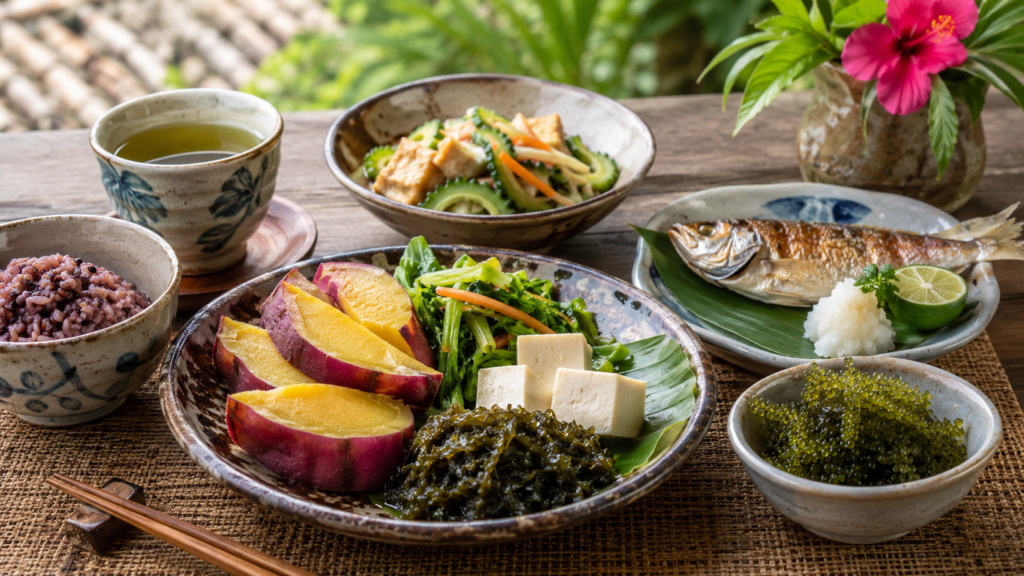
For much of the 20th century, the traditional Okinawan diet was heavily plant-based and built around one major staple: the purple or orange sweet potato.
Common traditional Okinawan foods included:
- Sweet potatoes
- Leafy greens
- Bitter melon
- Seaweed
- Tofu
- Soybeans
- Miso
- Herbs and medicinal plants
- Small amounts of fish
- Occasional pork
- Mushrooms
- Green tea
- Jasmine tea
The diet was naturally high in complex carbohydrates from whole plant foods, moderate in protein, low in calories, and low in saturated fat compared with many Western diets.
This matters because Okinawan longevity was not linked to high-protein dieting, extreme fasting, or complicated meal plans. It was linked to a traditional food environment where most daily meals were simple, plant-rich, and modest in portion size.
The 80% Rule: Hara Hachi Bu
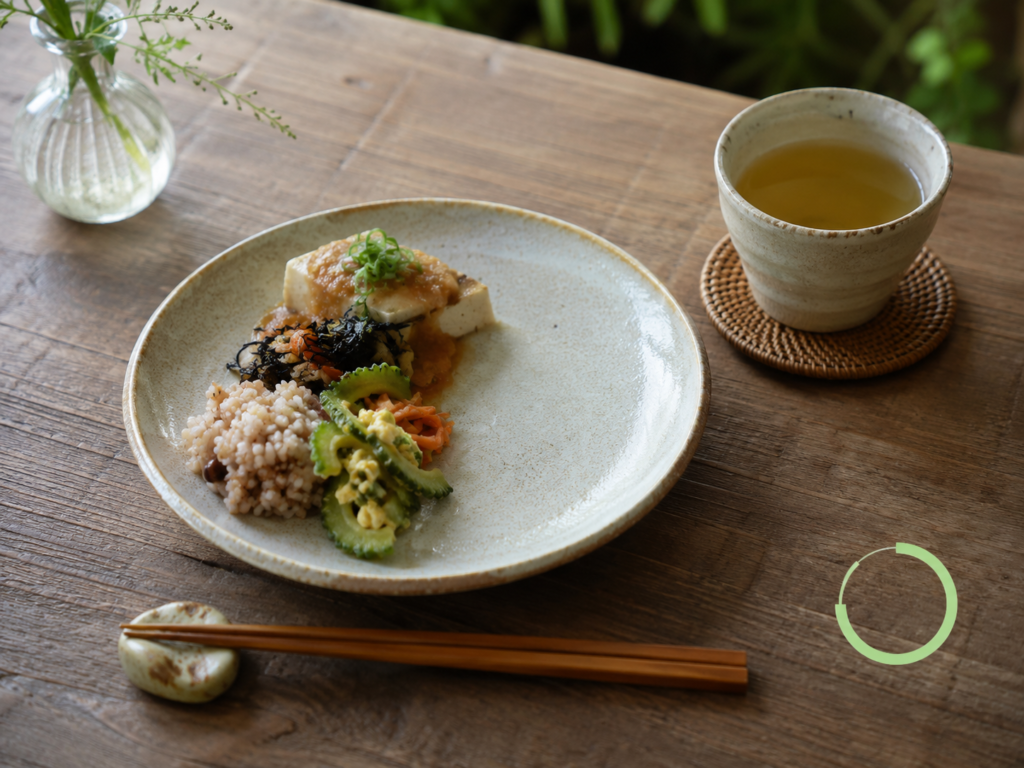
One of the best-known Okinawan eating principles is hara hachi bu.
It roughly means eating until you are about 80% full instead of completely stuffed.
This is not the same as dieting. It is not about counting every calorie or forcing hunger. It is a cultural habit that encourages awareness, slower eating, and stopping before the body feels overloaded.
In modern eating environments, fullness is often treated like a finish line. Plates are large, portions are oversized, and many meals are eaten quickly while distracted.
Hara hachi bu does the opposite.
It creates a pause.
That pause may help reduce overeating without requiring strict rules. Over decades, small differences in portion size and calorie intake can matter.
This is one reason the Okinawan approach is so interesting: it combines food quality with food rhythm.
The lesson is not “eat less forever.”
The lesson is to eat with enough awareness to stop before excess becomes automatic.
Food 1: Sweet Potatoes
The sweet potato is one of the most important Okinawan diet longevity foods.
Traditional Okinawan meals relied heavily on sweet potatoes as a staple carbohydrate. This is very different from many modern diets that treat starchy foods as something to fear.
Sweet potatoes provide:
- Complex carbohydrates
- Fiber
- Potassium
- Vitamin C
- Carotenoids in orange varieties
- Anthocyanins in purple varieties
The key is that sweet potatoes are whole foods. They are not refined flour, sugary snacks, or ultra-processed carbohydrates. They come with fiber, water, micronutrients, and slow-digesting energy.
A traditional Okinawan plate built around sweet potatoes and vegetables is very different from a Western meal built around fries, white bread, or sugary cereal.
This is where the Okinawan diet challenges a common nutrition myth: carbohydrates are not automatically unhealthy. The source and pattern matter.
Food 2: Bitter Melon and Vegetables
Okinawan cuisine includes a variety of vegetables, including bitter melon, leafy greens, carrots, radish, cabbage, and herbs.
Bitter melon is especially associated with Okinawan cooking. It is often used in dishes like goya champuru, a stir-fry commonly made with bitter melon, tofu, egg, and sometimes pork.
Vegetables support longevity patterns because they add:
- Fiber
- Potassium
- Magnesium
- Polyphenols
- Antioxidants
- Volume without excessive calories
But the bigger point is consistency.
In many traditional diets, vegetables are not occasional side dishes. They are part of the daily structure of meals.
That is what Okinawan eating gets right.
It does not depend on one perfect vegetable. It depends on eating plants regularly enough for the pattern to matter.
Food 3: Tofu and Soy Foods
Soy foods are another important part of the traditional Okinawan diet.
Tofu, soybeans, and miso provide plant-based protein, minerals, and isoflavones. In Okinawa, tofu has historically been eaten often and in practical, savory meals rather than as a modern meat replacement trend.
This is important because traditional soy intake looks different from highly processed soy snacks or isolated supplements.
In the Okinawan diet, soy foods appear as part of a broader pattern: vegetables, sweet potatoes, seaweed, herbs, small portions, and mostly whole foods.
Tofu also helps explain how a lower-meat diet can still provide protein.
The Okinawan diet was not protein-free. It simply did not build every meal around large portions of animal protein.
That balance may be one reason the traditional diet is associated with healthy aging.
Food 4: Seaweed
Seaweed appears in many East Asian food traditions, including Okinawan cuisine.
It can provide iodine, minerals, fiber-like compounds, and unique plant compounds not commonly found in land vegetables.
Seaweed also reflects a broader principle of traditional diets: food diversity.
Modern diets often repeat the same few ingredients in processed forms. Traditional diets tend to include a wider range of plants, herbs, roots, sea vegetables, legumes, and fermented foods.
That diversity may support gut health and nutrient intake.
Seaweed is not a magic longevity food by itself, but as part of the Okinawan pattern, it adds another layer of nutritional variety.
Food 5: Herbs, Tea, and Medicinal Plants
Okinawan food culture includes herbs, teas, and plants used traditionally for both flavor and wellness.
Common examples include turmeric, mugwort, green tea, jasmine tea, and other local botanicals.
These foods and drinks may contribute small amounts of antioxidants and polyphenols. But their bigger role may be cultural.
They make meals flavorful without relying heavily on ultra-processed sauces, excess sugar, or oversized portions.
Tea also creates ritual. A daily tea habit can replace sugary drinks, slow the pace of eating, and support hydration.
Longevity is rarely about one dramatic choice. It is usually about repeated small choices that add up over decades.
Food 6: Small Amounts of Fish and Pork
The traditional Okinawan diet was not strictly vegan or vegetarian.
Fish and pork were included, but often in smaller amounts than in modern Western diets.
This matters because the Okinawan pattern was not based on absolute restriction. It was based on proportion.
Animal foods existed, but plants dominated the plate.
This balance may be more realistic for many people than extreme diet rules. Instead of asking, “Should I completely remove meat?” the Okinawan pattern suggests a different question:
What happens if plant foods become the center and animal foods become smaller supporting ingredients?
That question is more practical — and often more sustainable.
Why the Okinawan Diet May Support Longevity
The traditional Okinawan diet may support healthy aging because several protective habits work together.
It Is Plant-Forward
Most meals were built around plants, especially sweet potatoes, vegetables, legumes, and soy foods.
It Is Naturally High in Fiber
Sweet potatoes, vegetables, legumes, and seaweed all contribute fiber or fiber-like compounds.
It Is Moderate in Calories
The hara hachi bu principle supports stopping before overeating becomes automatic.
It Is Low in Ultra-Processed Foods
Traditional Okinawan eating was based on simple ingredients, not packaged snacks and refined convenience foods.
It Is Culturally Sustainable
The diet was not a short-term challenge. It was part of daily life, family meals, and community habits.
That is the real power of Okinawan eating.
It was not designed to be a diet trend. It was a way of life.
What People Get Wrong About the Okinawan Diet
The Okinawan diet is often oversimplified online.
Here are the biggest misunderstandings.
Myth 1: Okinawans Live Long Because of One Superfood
There is no single Okinawan superfood that explains longevity.
Sweet potatoes matter. Tofu matters. Vegetables matter. Seaweed matters. But none of them works alone.
The pattern matters more than the ingredient.
Myth 2: The Okinawan Diet Is Just the Japanese Diet
Okinawa has its own distinct food culture.
Traditional Okinawan eating was historically much heavier in sweet potatoes and lower in white rice than many mainland Japanese diets.
Treating all Japanese food as one category misses important cultural differences.
Myth 3: You Have to Eat Exactly Like Okinawans
You do not need to copy Okinawan food perfectly to learn from it.
The more useful approach is to apply the principles:
- Eat more whole plant foods
- Include legumes or soy foods
- Choose fiber-rich carbohydrates
- Eat until satisfied, not stuffed
- Reduce ultra-processed foods
- Build meals you can repeat for years
Longevity lessons should be adaptable, not performative.
Myth 4: Longevity Is Only About Diet
Food matters, but it is not the only factor.
Okinawan longevity has also been connected to social connection, purpose, movement, community, lower historical calorie intake, and cultural traditions.
Diet is part of the story, not the whole story.
That nuance matters.
How to Apply Okinawan Principles in Real Life
You do not need rare ingredients to build an Okinawan-inspired eating pattern.
Start with simple changes:
- Add sweet potatoes as a regular carbohydrate.
- Eat beans, lentils, tofu, or soy foods several times per week.
- Make vegetables part of most meals.
- Use herbs, spices, and tea to create flavor and ritual.
- Reduce ultra-processed snacks.
- Serve smaller portions and pause before getting seconds.
- Build meals around satisfaction instead of fullness.
The goal is not to turn your kitchen into Okinawa.
The goal is to learn from a traditional pattern that made healthy habits normal.
A Simple Okinawan-Inspired Meal Template
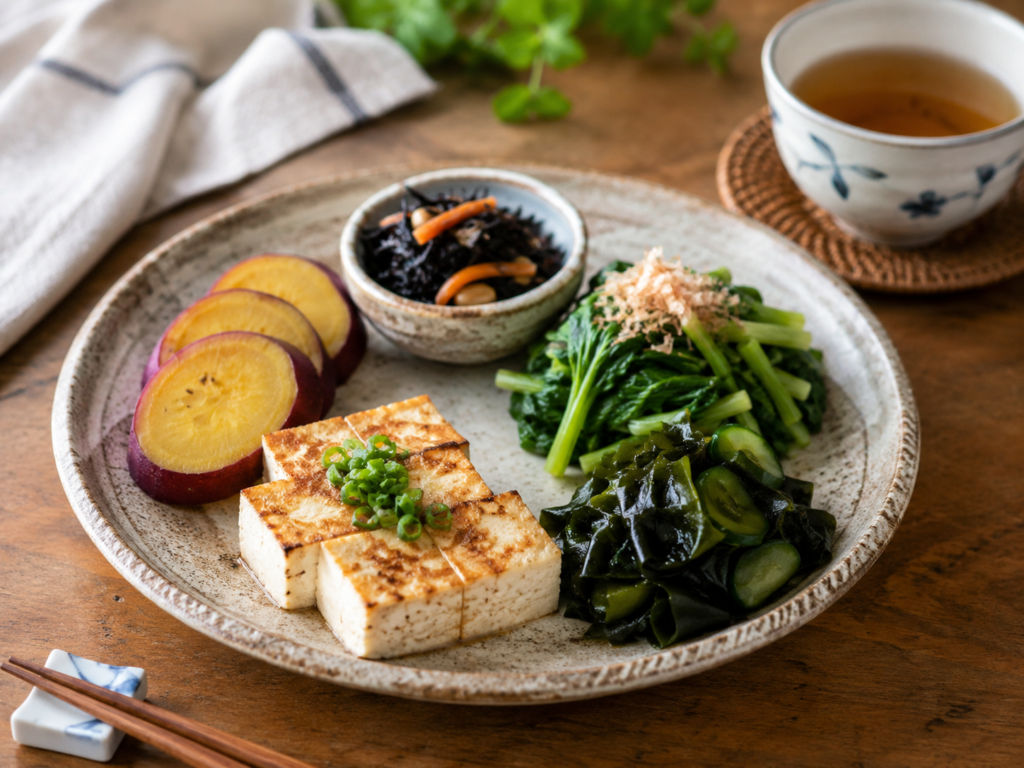
Here is a simple plate structure inspired by the traditional Okinawan pattern:
- Base: Sweet potato or another whole-food starch
- Protein: Tofu, beans, lentils, fish, or a small portion of meat
- Vegetables: Leafy greens, bitter vegetables, cabbage, carrots, mushrooms, or herbs
- Flavor: Miso, ginger, turmeric, garlic, green onion, or sesame
- Drink: Unsweetened tea or water
This kind of meal is simple, filling, and flexible.
It also shows why Okinawan diet longevity foods are not about luxury ingredients. They are about everyday foods used consistently.
The Bottom Line
Okinawan longevity is not explained by one food, one supplement, or one secret rule.
The traditional Okinawan diet worked because it combined several powerful habits:
Plant-forward meals. Sweet potatoes. Vegetables. Soy foods. Seaweed. Tea. Smaller portions. Fewer ultra-processed foods. Cultural consistency.
The lesson is not that everyone must eat exactly like Okinawans.
The lesson is that traditional diets often contain wisdom modern nutrition science is still catching up to.
Okinawa shows us that healthy aging is not built from hacks.
It is built from repeated habits that are simple enough to last.
Quick Takeaways
- Okinawan diet longevity foods include sweet potatoes, vegetables, tofu, soy foods, seaweed, herbs, tea, and small amounts of fish or pork.
- The traditional Okinawan diet was plant-forward, fiber-rich, and naturally moderate in calories.
- Hara hachi bu means eating until about 80% full.
- Okinawan longevity is not caused by one superfood; it is connected to a full cultural pattern.
- You can apply Okinawan principles without copying the diet perfectly.
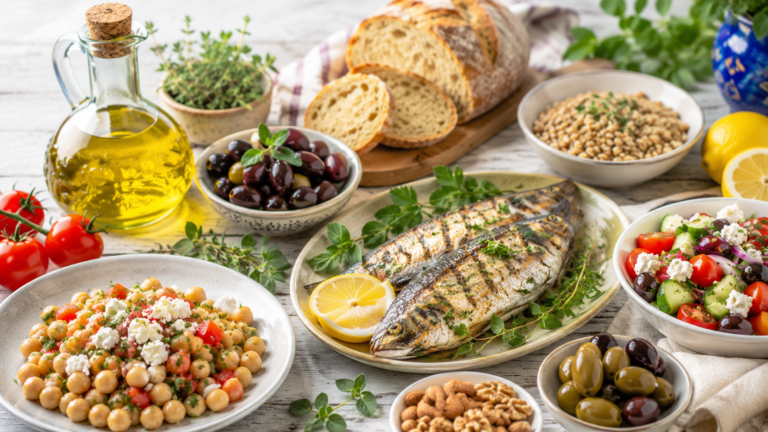
What the Mediterranean Diet Gets Right (And What the Research Actually Says)